What xeriscape landscaping is
Xeriscape, said ZEER-uh-scape, is landscaping planned to need little or no watering beyond the rain. The word joins the Greek xeros, dry, to landscape; Denver Water coined it in 1981, during a drought, for a way of gardening rather than a look.
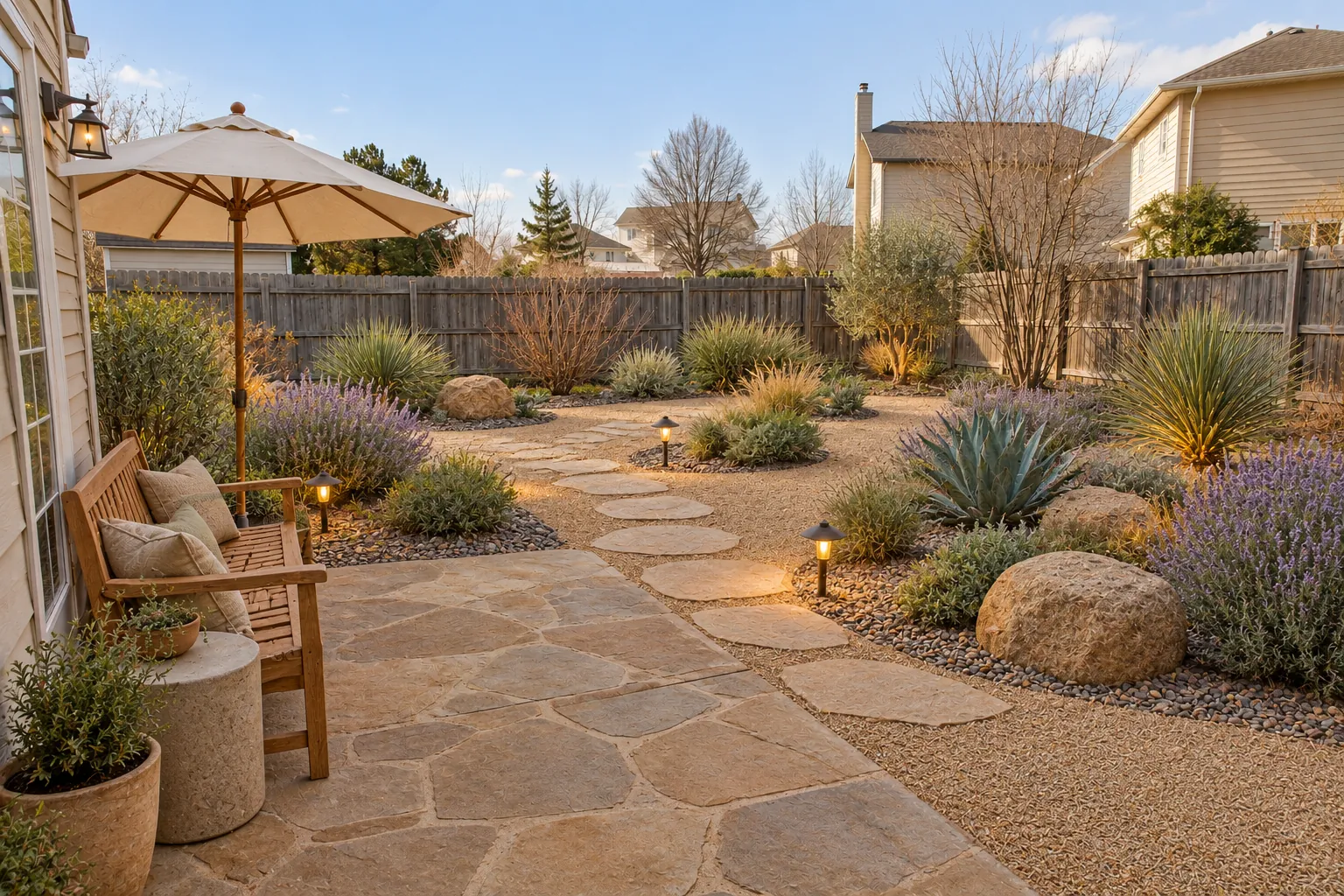
In practice it means less lawn, more ground covered with gravel, stone or mulch, and plants chosen for your climate and grouped by how much water they need. Done well, it isn't a yard of bare rocks: the example here still has a patio, a path and plenty of flowers, just no grass to water or mow.
It isn't only for deserts. The idea works in any yard that dries out in summer; only the plants change with the climate.
- The main idea
- A garden that needs little water beyond the rain
- Replaces
- Most of the lawn
- Start with
- One sunny bed, gravel and three tough plants
- Watch out for
- Bare rock with too few plants
The seven principles of xeriscape design
Xeriscape design comes down to seven principles, set out by Denver Water when it named the idea. A xeriscape landscape that follows all seven still has color in August on far less water than a lawn.
01
Plan and design
Draw the yard before you buy a plant: where the sun falls, where rain runs off the roof, where you walk and sit. Thirstier plants go nearest the house and the driest ones at the edges.
02
Improve the soil
Dig a hole a foot deep and fill it with water. If water still stands in it a few hours later, the soil drains poorly: work in compost or grit so roots get air. Succulents and herbs like it lean, so don't overfeed.
03
Keep turf practical
Grass earns its water where feet use it: a play patch, a dog run, a place for a blanket. Give it a hard edge so it can't creep into the beds.
04
Choose plants for the site
Native and well-adapted plants, picked for your sun and your winter, then planted in zones that share the same water.
05
Water efficiently
Drip lines at the roots, watered deeply and seldom, early in the morning. A controller that skips rainy days saves more than any plant choice.
06
Mulch every bed
Two to three inches of gravel or bark keeps the soil cool and damp and the weeds down. Gravel suits succulents; bark suits shrubs and perennials.
07
Maintain it lightly
Pull weeds while they're small, cut back grasses once a year in late winter, and turn the watering down after the second summer.
How to spot a xeriscape yard
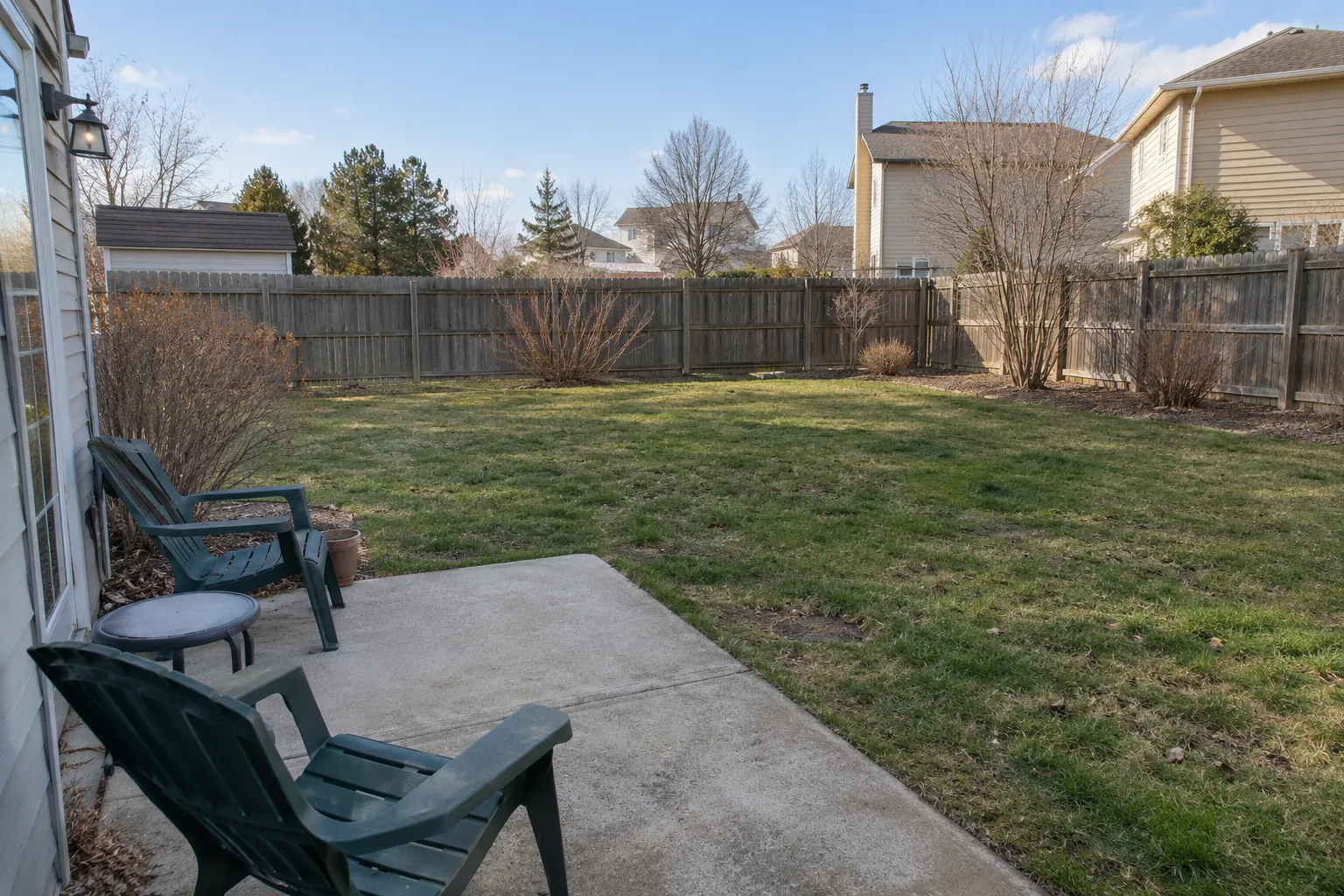
Four things give it away, and this one backyard has all four. It started as a patchy lawn with a concrete patio.
 Example design, created with AI
- 01
No lawn, and nothing missing
Decomposed granite, a fine crushed stone that packs firm, covers the ground where the grass was. It drains fast and never needs mowing, and it's still a place to walk.
- 02
A flagstone patio and stepping stones
Big flat stones make the patio by the back door and a path across the gravel. Rain soaks in around them instead of running off.
- 03
Tough plants, grouped
Agave and yucca, lavender and ornamental grasses grow in beds edged with river rock, in clusters, so plants that need the same water share a bed.
- 04
Boulders, shade and soft light
A few large boulders give the beds weight, an umbrella shades the bench, and low path lights mark the way after dark.
Xeriscape plants to start with
Every one of these needs regular water in its first season while the roots grow; after that, many get by on rain and a deep soak now and then. Not all of them grow everywhere, so ask a local nursery which suit your zone.
Succulents and spiky plants
Agave, yucca and red yucca give the beds shape all year. Many agaves take only a light frost, so in cold areas lean on yucca and hardy ice plant.
Mediterranean herbs
Lavender, rosemary, sage and thyme: scented, loved by bees and happy in poor, fast-draining soil.
Ornamental grasses
Blue fescue, muhly grass and little bluestem move in the wind and keep their shape into winter.
Flowering perennials
Salvia, yarrow, penstemon, coneflower, blanket flower and catmint bring color from spring to fall.
Groundcovers
Creeping thyme, sedum and ice plant fill the gaps between stepping stones where grass used to grow.
Xeriscape mistakes to avoid
All rock, no plants
A yard of bare gravel, sometimes called zeroscape, gets hot, throws glare at the house and looks unfinished. Plan for plants to fill most of the beds once they've grown.
Plastic under the gravel
Plastic sheeting keeps water and air from the soil, and the plants beside it struggle. If you want a weed barrier, use a fabric that lets water through, or skip it and pull the few weeds by hand.
Thirsty and dry plants side by side
A rose next to an agave means one gets too much water or the other too little. Group plants by how much they drink, and water each group on its own line.
No water in the first year
Drought-tolerant doesn't mean no water from day one. New plants need regular watering until their roots grow, usually through the first summer.
How to xeriscape your yard
- Take a photo of the yard and note where the sun falls: most xeriscape plants want full sun.
- Ask your water utility before you take out the lawn. Some pay rebates for replacing grass, often only if you apply first.
- Call 811 before you dig, so buried gas, power and water lines get marked.
- Keep a small lawn only where you use it. Take out the rest by cutting the sod, or cover it with cardboard and mulch for a season.
- Put in the hard parts first: the patio, the path and edging for the beds.
- Plant in groups by water need, run drip lines to the plants, and finish with gravel or mulch.
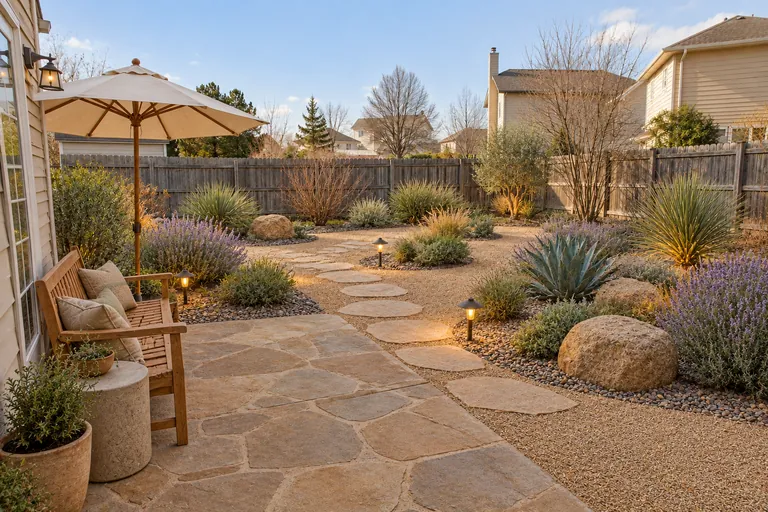
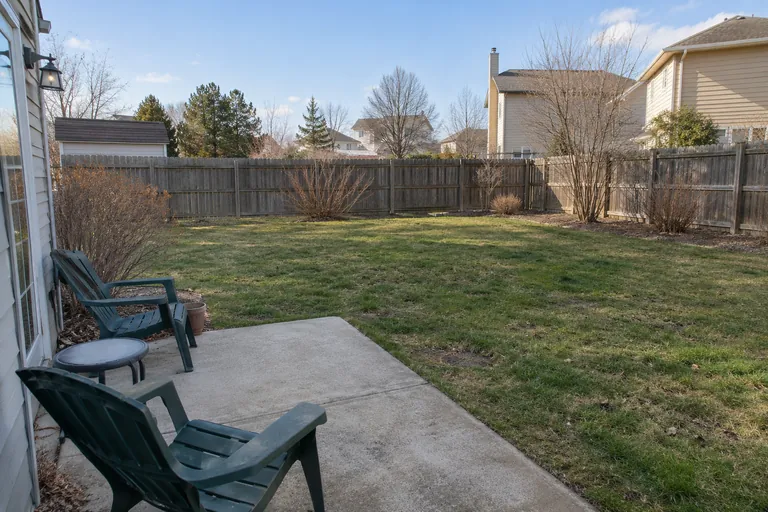 Example photo, created with AIExample design, created with AI
Before
Xeriscape
Or see it first: upload a photo of your yard in the tool above. The fence, the house wall and the camera angle stay; the lawn, the paths, the planting and the seating change. Try xeriscape on my yard
Other low-water looks
Xeriscape isn't the only way to cut back the lawn. A Mediterranean terrace with lavender, rosemary and terracotta pots, or a naturalistic meadow of coneflowers and grasses, can be just as dry. See all six backyard styles on the AI landscape design page, and the Mediterranean style inside the house and out. For the front of the house, the exterior house color visualizer tries new siding and trim colors, and AI home design does the whole house, inside and out.