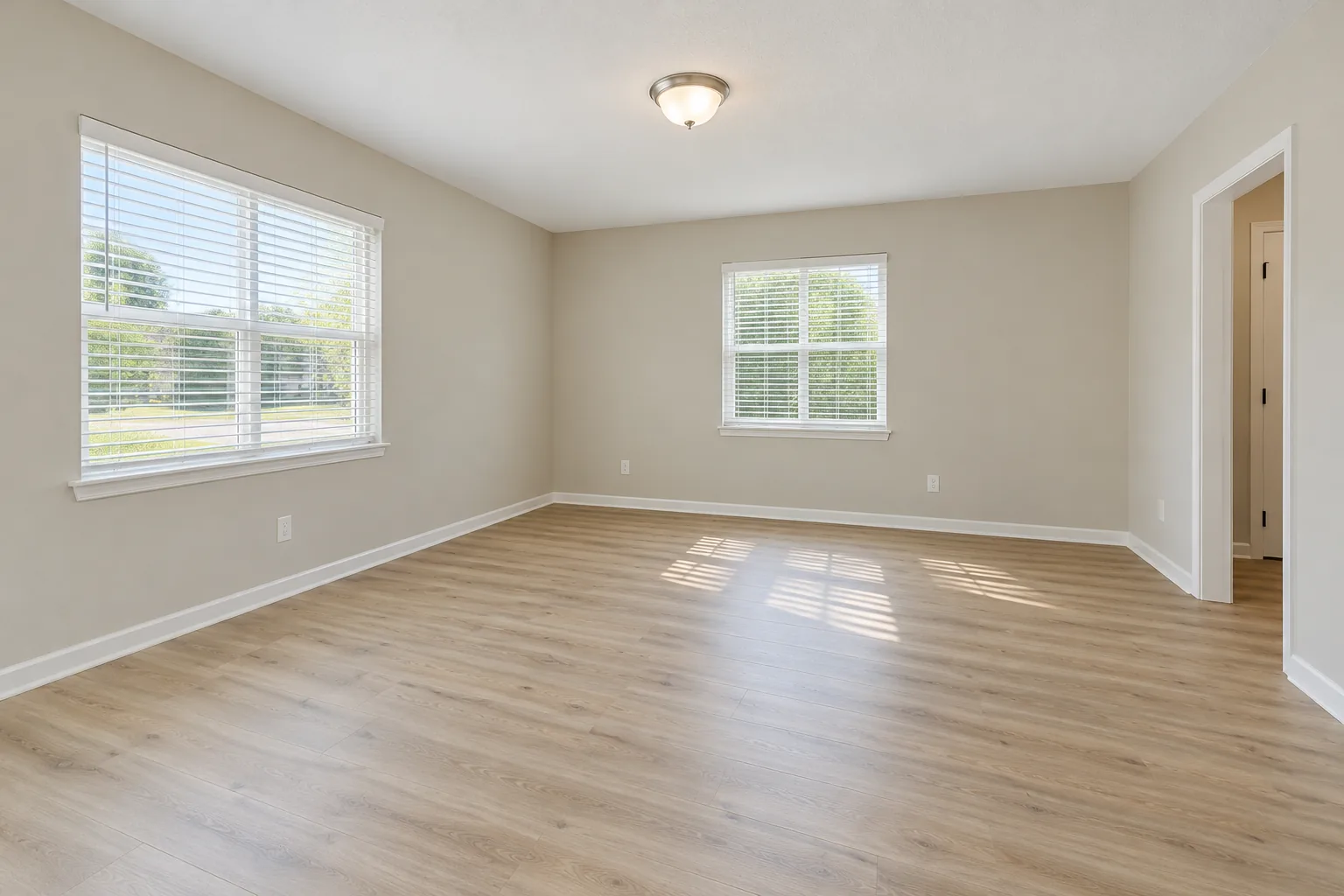
 Example photo, created with AI
- Light greige walls
- Two windows with white blinds
- Light oak floor, door on the right
Your room today
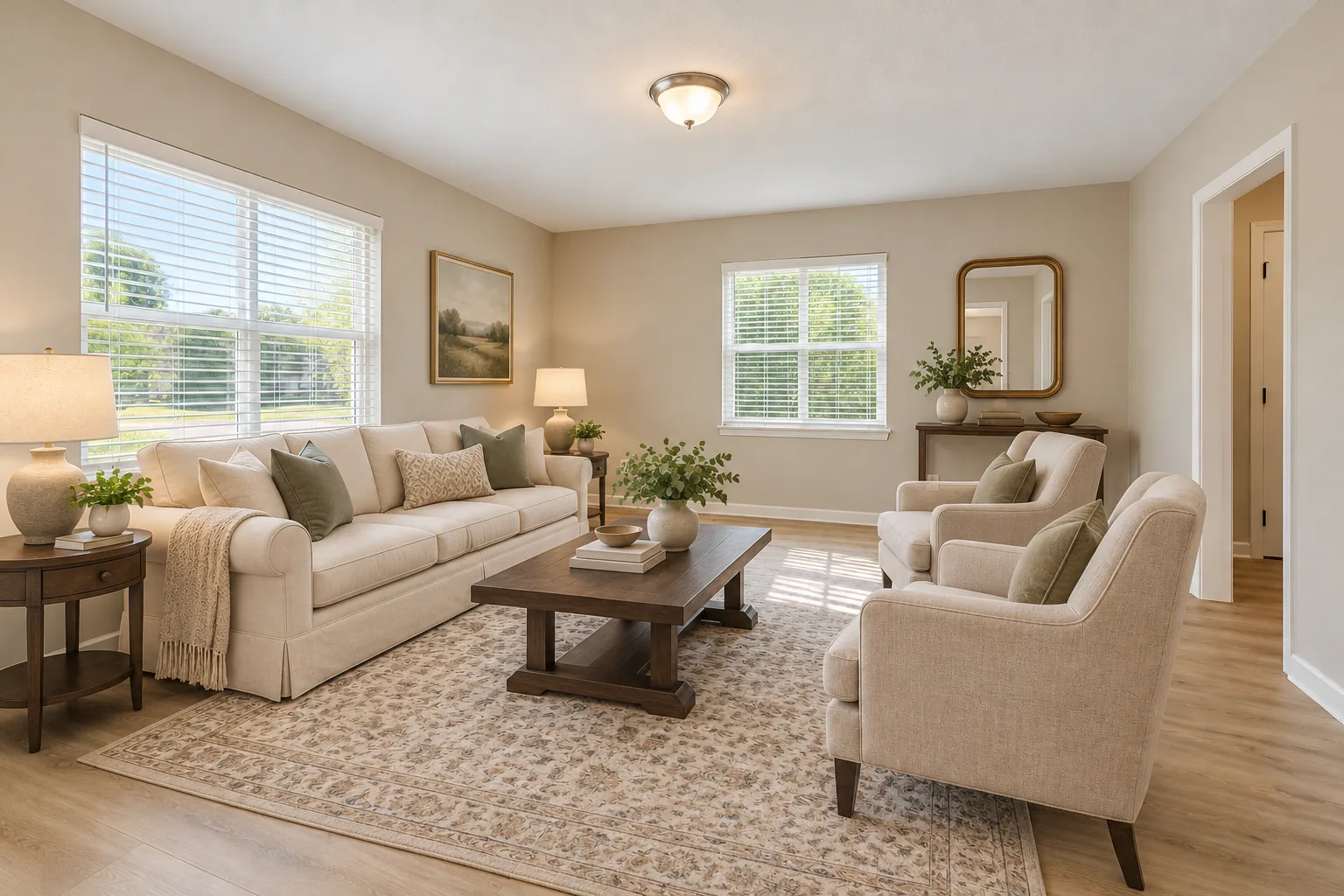
One living room, before and in the transitional style · Scroll to explore
Transitional interior design sits between traditional and modern: classic shapes like a rolled-arm sofa and dark wood tables, with cleaner lines, warm neutral colors and very little ornament.
The same room before and in the transitional style
Example photo, created with AIYour room today
Example designs, created with AI
 Your turnExamples created with AI
$11.90 for 35 credits or $32.90 for 125, paid once. No subscription.
Transitional design is the middle ground between traditional and modern. It keeps the comfortable, familiar shapes of a traditional room, such as a rolled-arm sofa, upholstered armchairs and a wood coffee table, and leaves out the ornament: no heavy carving, no fringe, no busy floral fabric. The colors are warm neutrals, and the lines are simpler than in a classic room.
In this living room, an empty room with greige walls, white blinds and a light wood-look floor was staged with a cream rolled-arm sofa, two cream upholstered armchairs, a dark wood coffee table, a soft patterned rug, table lamps on dark wood side tables, a console with an arched mirror above it and a framed landscape. The walls, the windows, the door and the ceiling light are the same as in the empty room; everything else was added.
It reads as comfortable and well kept to almost anyone, and it doesn't date quickly, which is one reason you see it so often in homes staged for sale. If modern feels too cold to you and traditional too fussy, transitional is usually where you land.
Four things give it away, and this one living room has all four.
Example designs, created with AIThe sofa has rolled arms and the armchairs a traditional outline, but both are covered in plain cream fabric, with no fringe, buttons or pattern. The shape is classic; the finish is quiet.
The coffee table, the side tables and the console are a dark brown wood in simple shapes. Against greige walls and cream upholstery, they give the room its contrast.
The rug has a traditional pattern in faded beige and taupe, so it adds interest without competing with anything. Olive green in the cushions and a little greenery are the only real color.
Table lamps with fabric shades stand at both ends of the sofa, the two armchairs match, and the arched mirror is centered over the console. The room is arranged with balance, a habit from traditional design, without feeling stiff.
Transitional works in every room. The bedroom example has a cream upholstered bed, brass pleated lamps and a faded patterned rug; the bathroom a white shaker vanity, a gray hexagon floor and nickel fixtures. In empty rooms staged for sale, the dining room gets a dark wood table with cream upholstered chairs and a mirror over the buffet, and the kitchen cream counter stools on dark wood frames, with the cabinets left as they were.
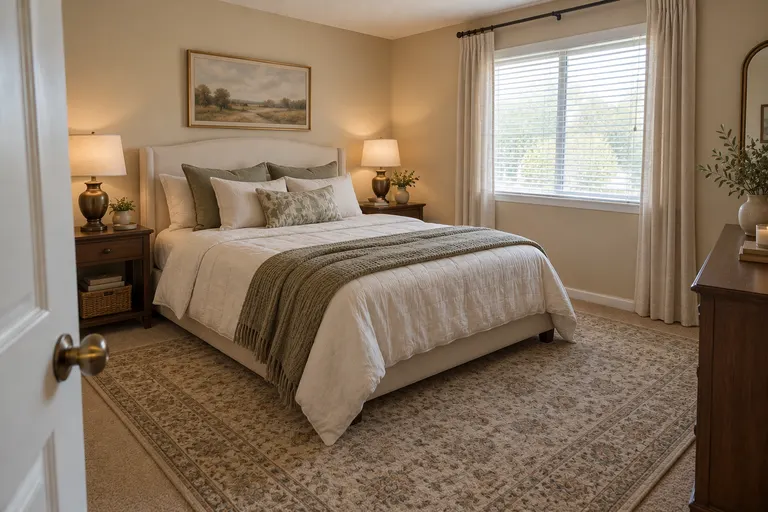 Example designs, created with AI
Cream upholstered bed · Brass pleated lamps · Faded patterned rug
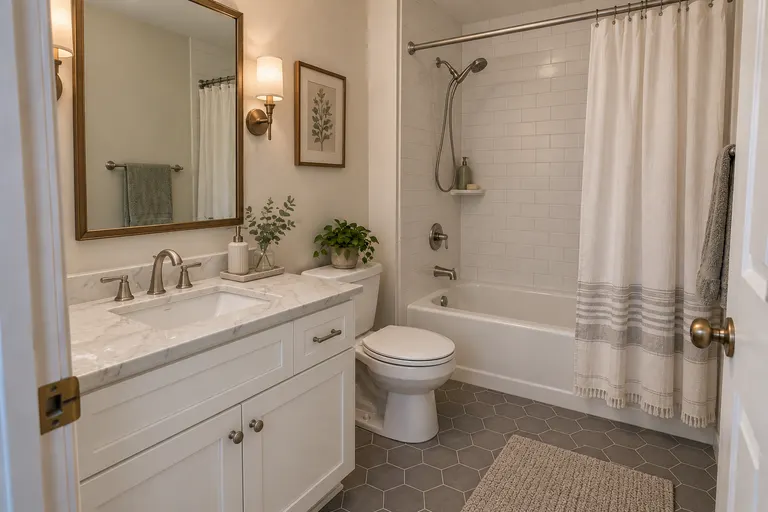 Example designs, created with AI
White shaker vanity · Gray hexagon floor · Nickel fixtures
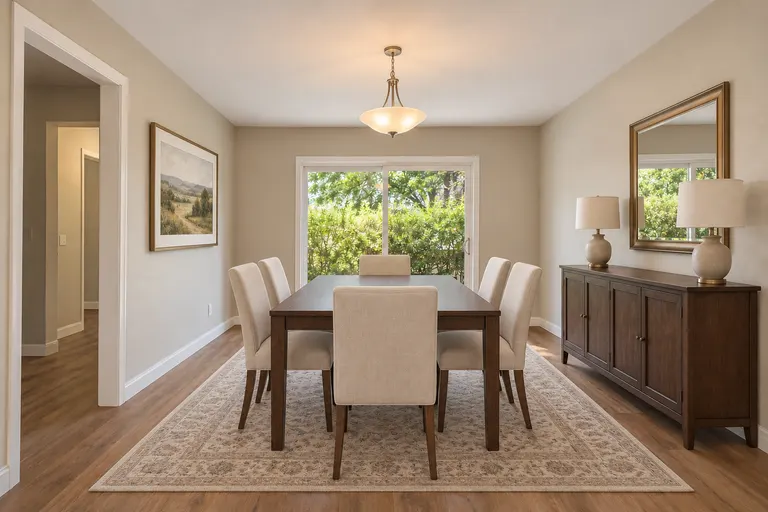 Example designs, created with AI
Dark wood table · Cream upholstered chairs · Mirror over the buffet
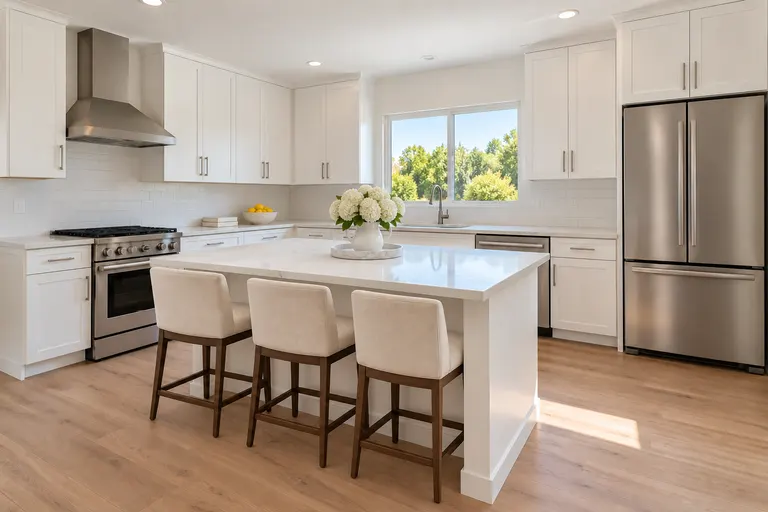 Example designs, created with AI
Cream counter stools · Marble tray · Hydrangeas in a white pitcher
Example designs, created with AI. Each one starts from an ordinary room, so you can see what changed.
Keep the base neutral and warm: greige, warm gray, cream, ivory and taupe on the walls and the big upholstered pieces. Add depth with dark brown wood or a charcoal accent, and let color come in small, muted doses, such as olive, slate blue or dusty green in cushions and art.
For materials: dark or mid-tone wood in simple shapes, plain woven upholstery, linen and cotton, a wool rug with a soft traditional pattern, ceramic lamps with fabric shades, and brushed brass or nickel in small amounts. Mix one or two traditional details with plain, modern surfaces.
A sofa, loveseat and chair from one set make a room look like a showroom. Mix pieces that share a color or a wood tone instead: a rolled-arm sofa with simpler, tighter armchairs.
Greige walls, a beige sofa and a beige rug with nothing dark look washed out. One dark wood piece and a black or bronze frame give the room depth.
Add too much carving, fringe and pattern and the room turns traditional; strip it to glass and chrome and it turns modern. Keep both halves in the room.
A small rug with everything pushed against the walls looks unfinished. Use a rug big enough for the front legs of every seat, and pull the furniture in around it.
Example photo, created with AIExample designs, created with AIBefore
Transitional
Or see it first: upload a photo of your room below and pick Transitional. The walls, windows and camera angle stay; the furniture, colors and decor change.
Transitional is already picked. Choose your room, upload a photo and generate.
Your photo
Tip: stand in a doorway or corner and fit the whole room in one wide photo, floor to ceiling. Close-ups of one corner give odd results.
Style
Examples created with AI.
Size
about 1 megapixel · 1 credit
Your image will show up here.
Designs are made with OpenAI's GPT Image 2.5. The AI is asked to keep your walls, windows and camera angle. Compare the result with your photo before making real changes.
A blend of traditional and modern design: classic furniture shapes like rolled-arm sofas and wood tables, kept simple, with clean lines, warm neutral colors and little ornament.
Contemporary design follows what's current, often with sleek low furniture, glass, metal and stronger contrast. Transitional keeps traditional shapes and warmer materials, so it's softer and changes less with trends.
Mostly greige, warm gray, cream, ivory and taupe, with dark wood for contrast and small amounts of muted color such as olive, navy or slate blue.
No. Both are comfortable and neutral, but modern farmhouse adds rustic materials: shiplap, reclaimed wood and black iron. Transitional is more polished, with smooth painted walls, upholstered pieces and finished dark wood.
It looks comfortable and cared for without being too personal, so most buyers can picture their own things in the room. Neutral walls and classic furniture also photograph well for a listing.
Yes. Upload a photo of your room and pick Transitional: you get the same room back with transitional furniture, colors and decor, and the walls, windows and camera angle stay. A design at the standard size uses 1 credit, and the packs are $11.90 for 35 credits or $32.90 for 125, paid once.
More style guides: Japandi interior design, Art Deco interior design, Mid-century modern interior design, Minimalist interior design, Boho interior design, Industrial interior design, Traditional interior design, Coastal interior design, French country interior design, Scandinavian interior design, Organic modern interior design, Modern farmhouse interior design and Mediterranean interior design.
More rooms: AI living room design, AI bedroom design, the AI room design home page, or AI interior design with one living room in all fifteen styles.